


Premium Mixed Cornflower Seeds (Bachelor's Button) - Non-GMO
Premium Mixed Cornflower Seeds (Bachelor's Button) - Non-GMO
Couldn't load pickup availability

Premium Mixed Cornflower Seeds (Bachelor's Button) - Non-GMO


Premium Mixed Cornflower Seeds (Bachelor's Button) - Non-GMO
Centaurea cyanus, a hardy annual for full sun
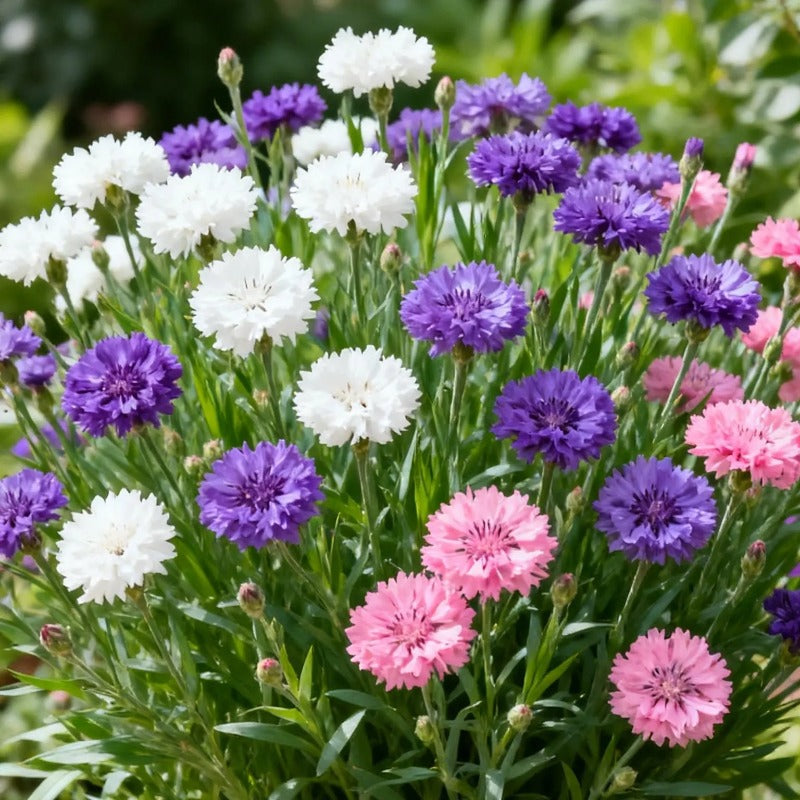
You're buying a sealed packet of seed, not a plant. Sow it in a sunny spot after the last frost and, within nine to thirteen weeks, you'll have a stand of cornflowers in blue, pink, white and wine red that keeps blooming until the first hard frost.
- Cornflower blue
- Pink
- White
- Burgundy
- Lavender
- LightFull sun
- SowAfter last frost
- First flowers65–90 days
- Height2–3 ft tall
Seed packet only. No live plants, pots or soil are shipped.


Photos may show flowers grown from this mix for illustration. The item shipped is seed.
What arrives in the mail, and what doesn't
It's the question we get most often, so here's the plain answer: this is a seed product. The plants are the ones you grow.
You receive
- One sealed, labeled packet of mixed cornflower seed: approx. 2,000 seeds (about 25 g)
- Sowing and care instructions printed on the packet
- Seed from the 2026 lot, stored cool and dry until it ships
You don't receive
- Live plants, seedlings, plugs, cuttings or bulbs
- Pots, soil, fertilizer or plant food
- A fixed color ratio: it's a natural mix, so every packet differs a little
Why gardeners keep sowing cornflowers
A cottage-garden classic that asks for very little and gives back all summer.
Non-GMO and open-pollinated
Traditional Centaurea cyanus genetics with no genetic modification and no chemical seed coating. Save seed from your best plants and sow it again next year.
Easy from seed
Direct sow where they are to flower and cover lightly. No heat mat, no transplanting, no fuss: most packets are up within two weeks.
Four colors from one sowing
Cornflower blue, soft pink, white and burgundy, with a scattering of lavender, come up together, so a single drift looks planted rather than plain.
Bees, butterflies and hoverflies
Cornflowers are unusually rich in nectar and pollen and rank among the best annuals a home garden can offer pollinators.
Cut and dried
Stems reach 60 to 90 cm, last a week or more in a vase, and the petals hold their color when dried for confetti, wreaths and tea blends.
Tough once established
Drought tolerant, content in poor soil, and rarely bothered by deer or rabbits. Lean conditions actually produce more flowers.
Seed specifications
Everything you'd find on the back of the packet, in one place.
- Product name
- Premium Mixed Cornflower Seeds (Bachelor's Button), Non-GMO
- Botanical name
- Centaurea cyanus
- Common names
- Cornflower, Bachelor's Button, Bluebottle
- Seed type
- Non-GMO, open-pollinated, untreated (no chemical coating)
- Colors in mix
- Blue, pink, white and burgundy, with some lavender. Ratio varies by lot.
- Packet contents
- Approx. 2,000 seeds (about 25 g)
- Germination rate
- 90% or higher, lot tested
- Packed for
- 2026 growing season
- Country of origin
- China
- Seed storage
- Cool, dark and dry. Best sown within 2 to 3 years.
- Life cycle
- Hardy annual; self-seeds readily
- Mature height
- 60–90 cm (24–36 in)
- Spacing
- 20–30 cm (8–12 in) between plants
- Light
- Full sun, 6 or more hours a day
- Soil
- Any well-drained soil; thrives in poor, dry ground
- Sowing depth
- 6 mm (¼ in). Cover the seed; it germinates best in the dark.
- Germination
- 7 to 14 days at 15–21 °C (60–70 °F)
- Days to bloom
- 65 to 90 days from sowing
- Bloom season
- Early summer until the first hard frost
- Hardiness
- Grows as an annual in every zone; seedlings tolerate light frost
Sowing calendar
Northern Hemisphere timing. In the Southern Hemisphere, shift everything by six months. Autumn sowing suits regions with mild winters.
From packet to first flower
Cornflowers are one of the easiest annuals to grow from seed. Four steps, no special equipment.
-
Choose the spot
Full sun and ordinary, well-drained soil. Skip the compost and fertilizer: lean soil gives sturdier stems and more flowers than rich soil does.
-
Sow after the last frost
Rake the surface, scatter seed thinly and cover with 6 mm (¼ in) of soil. Cornflowers germinate best in the dark, so do cover them. Keep the surface moist; seedlings appear in 7 to 14 days.
-
Thin and support
When seedlings are about 5 cm (2 in) tall, thin to 20–30 cm (8–12 in) apart. In windy spots, tall stems appreciate a light stake or a ring of twine.
-
Cut, deadhead, repeat
First flowers open 9 to 13 weeks after sowing. Cut for the vase or snip spent heads and the plants keep going until frost. Leave a few heads to ripen at the end of the season and they'll sow themselves for next year.
Questions before you sow
Answers to what gardeners ask us most, starting with the big one.
Am I buying seeds or live plants?
Seeds. You'll receive a sealed packet of cornflower seed and nothing living. The plants come from your own sowing: cornflowers are among the easiest flowers to raise from seed, and most packets are up within two weeks.
Will I get every color in the mix?
The mix contains blue, pink, white and burgundy, with some lavender. Because it's a natural blend, the ratio varies from packet to packet and blue is usually the most common. We can't promise an exact split, and a plant's color isn't visible until it flowers.
When should I sow?
Direct sow outdoors in spring once the last frost has passed and the soil has warmed to about 15 °C (60 °F). Where winters are mild, sow again in early autumn: the seedlings overwinter as small rosettes and flower earlier and taller the next year.
For an indoor start, sow 4 to 6 weeks before your last frost and transplant carefully. Cornflowers dislike root disturbance, so biodegradable pots help.
Can I grow cornflowers in containers?
Yes. Choose a pot at least 25 cm (10 in) deep with drainage holes, use a free-draining mix and place it in full sun. These are tall plants, so give the pot a sheltered spot or add a few twigs for support.
Do they come back every year?
Each plant is an annual and lives for one season. But cornflowers self-seed freely: leave a few flower heads to ripen and you'll usually find volunteer seedlings the following spring. You can also collect the dry seed and store it for sowing where you want it.
Are the seeds Non-GMO and untreated?
Yes. This is open-pollinated Centaurea cyanus with no genetic modification and no fungicide or insecticide coating. It's suitable for seed saving and for gardens where you'd rather not use treated seed.
How many seeds are in a packet, and how much space will they cover?
Approx. 2,000 seeds per packet (about 25 g), with a tested germination rate of 90% or higher. Sown thinly and thinned to the recommended spacing, that's enough for roughly 20 to 30 m² (200 to 300 sq ft) of border, or a long cutting row plus several containers.
Are cornflowers safe around pets and children?
Cornflower petals are edible and the plant is generally listed as non-toxic to dogs and cats. The seeds are sold for sowing, not for eating, so store the packet out of reach like any other garden product.
Are they deer and rabbit resistant?
Mostly. Cornflowers are rarely a first choice for deer or rabbits, though very hungry animals may nibble young seedlings. Netting the bed for the first few weeks solves it.
My seeds haven't come up. What went wrong?
The usual causes are cold soil (below 10 °C / 50 °F), seed left uncovered on the surface, or soil that dried out completely. Give them a full three weeks, keep the surface moist and re-sow if needed.
If a packet fails despite following the instructions, contact us with your order number and the sowing date.
How are the seeds shipped, and how should I store them?
Seed ships in a sealed packet inside a padded mailer so it arrives dry. Keep any unsown seed cool, dark and dry (a sealed jar in a cupboard or the fridge works well) and it will stay viable for two to three years.
A packet of seed, a season of blue
Sow in spring, cut all summer, save seed in autumn. Live plants aren't part of this listing, which means every flower is one you grew.